Benchmark "BohrDr4" :
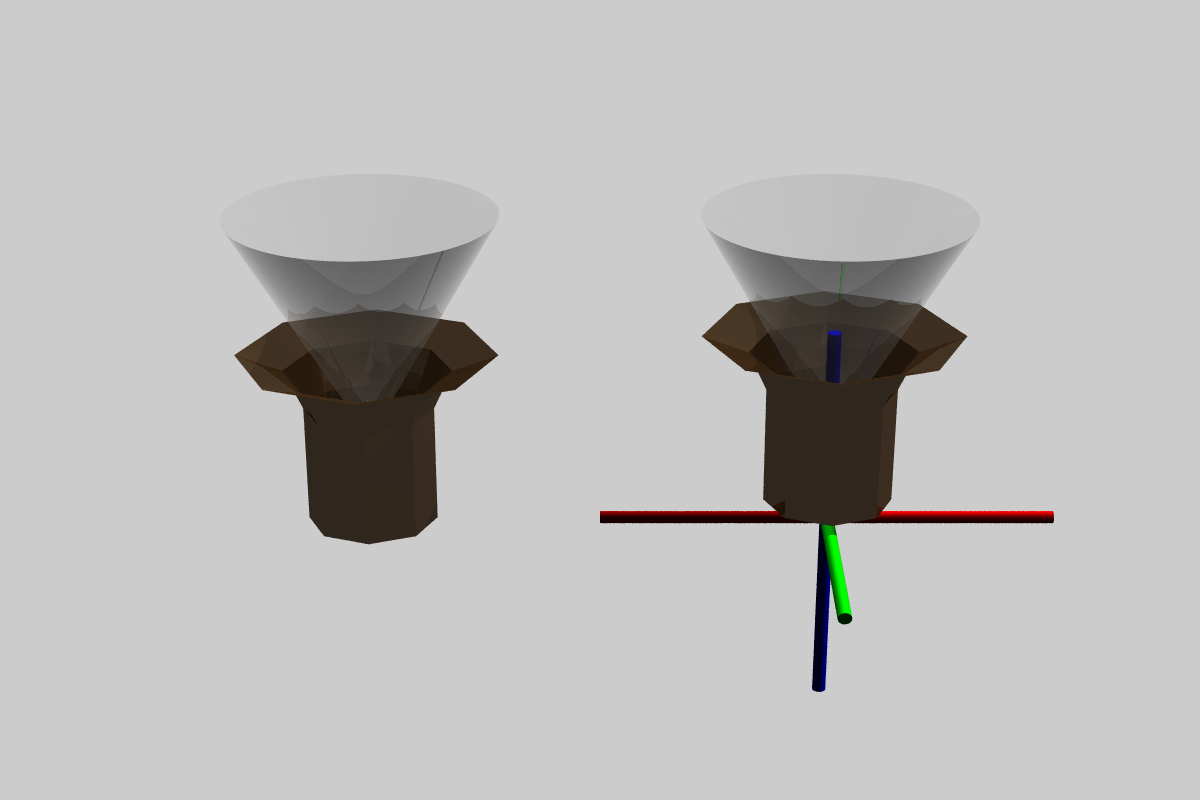
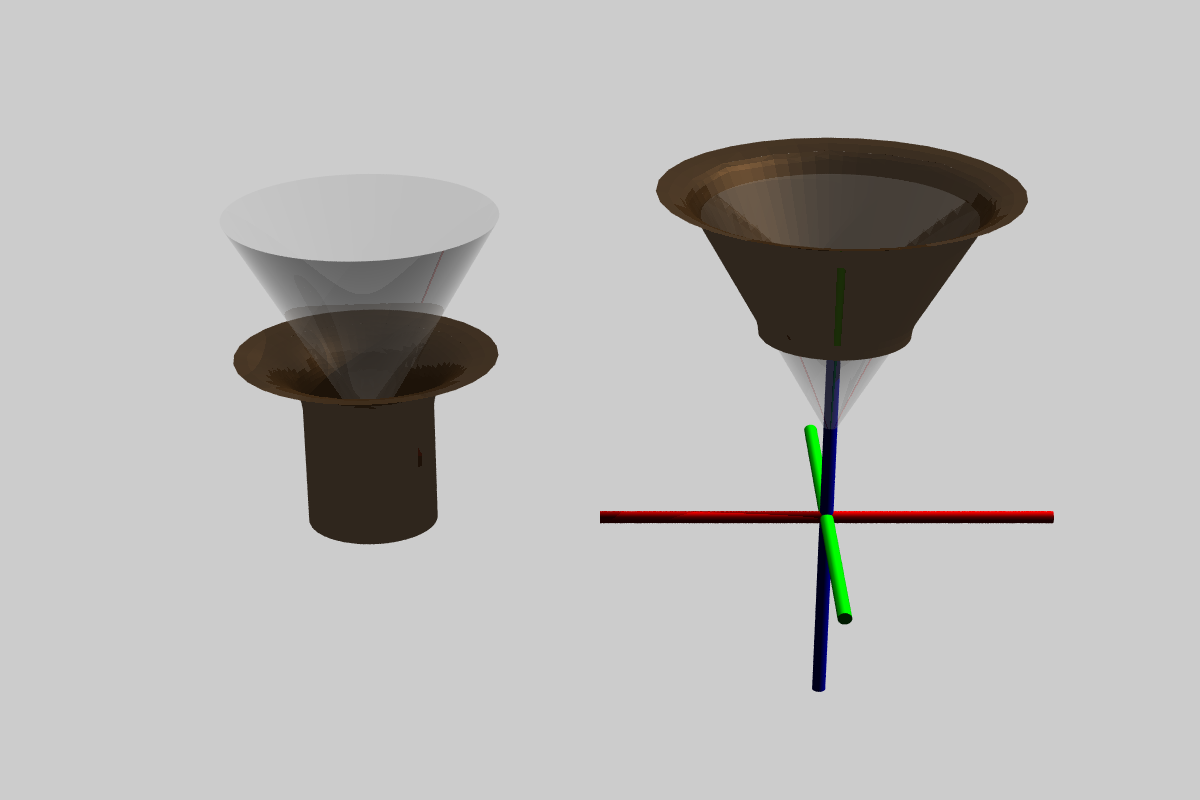
contact boundary
(x-y-z-coordinates)
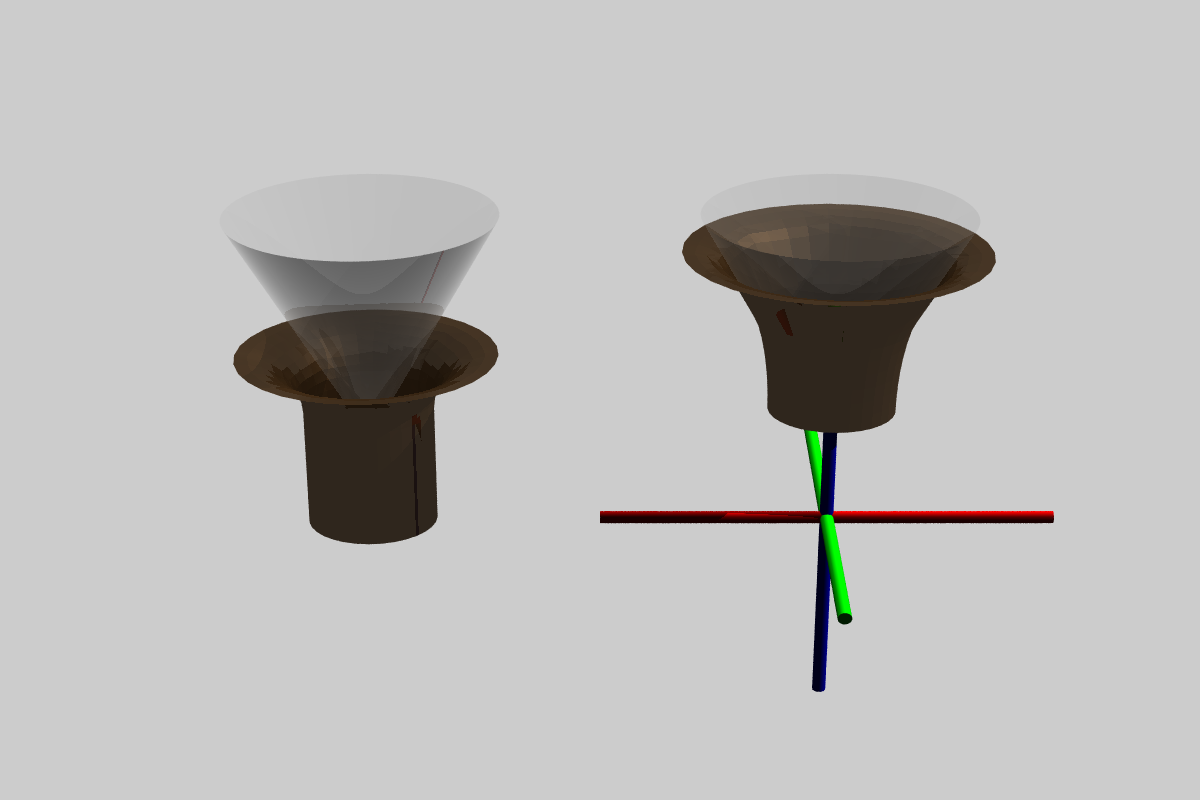
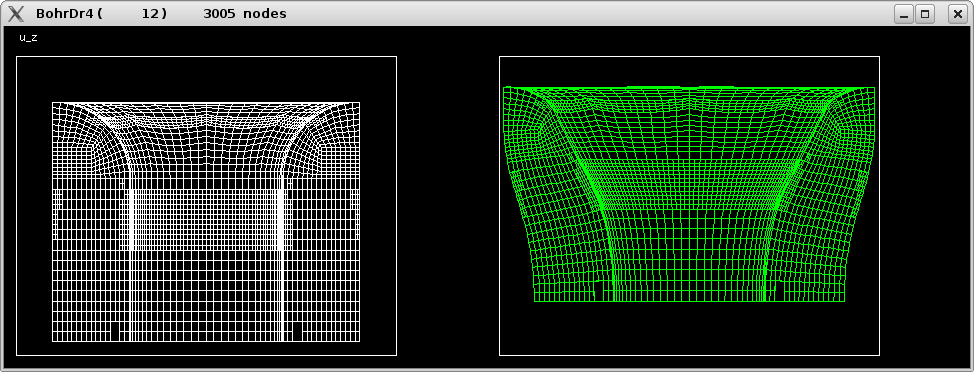
Simulation with chosen damping factor Delta t=1/5 / contact pressure statement
Picture 1: actual damping factor: t-Damp=0.20
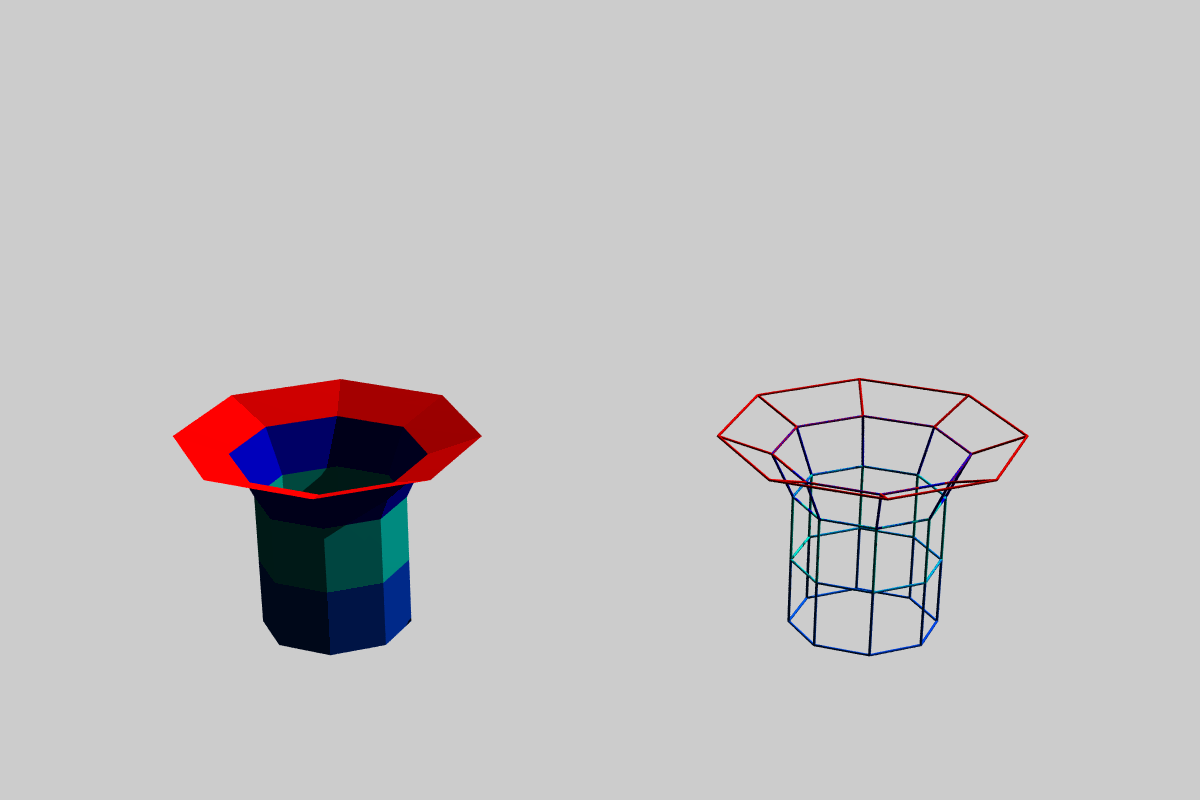
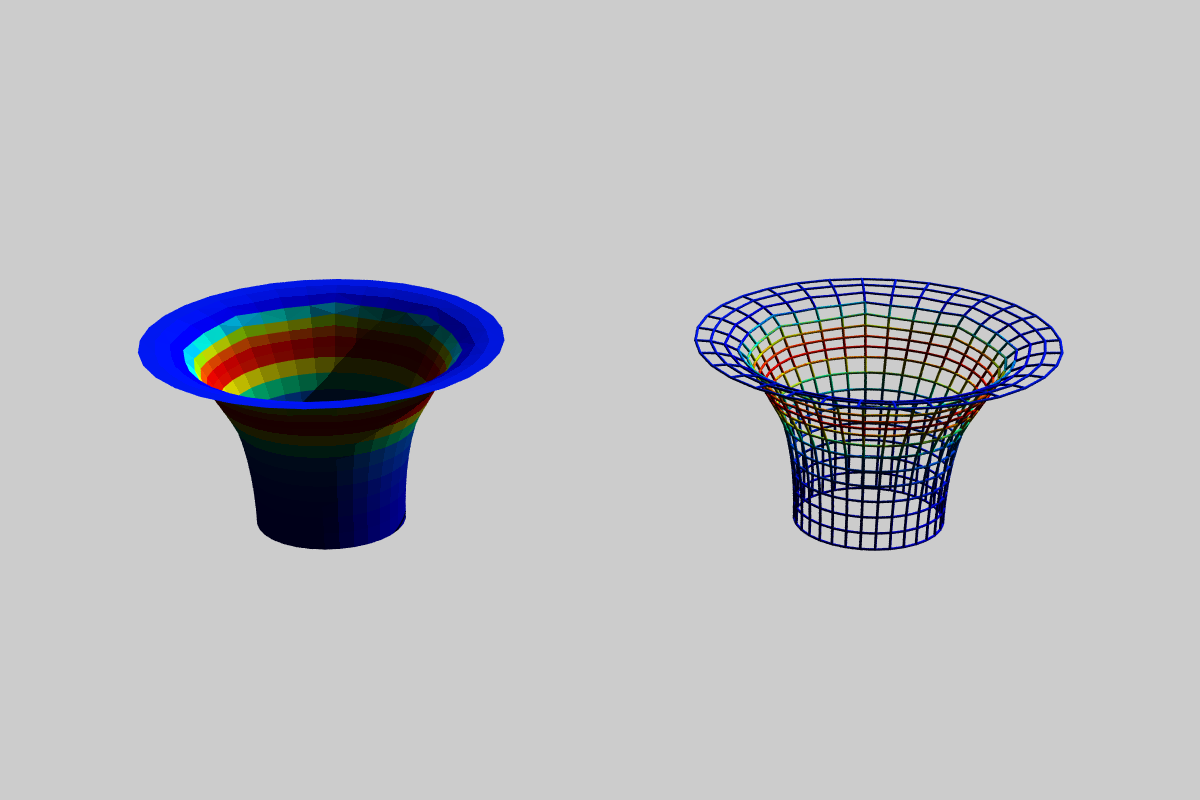
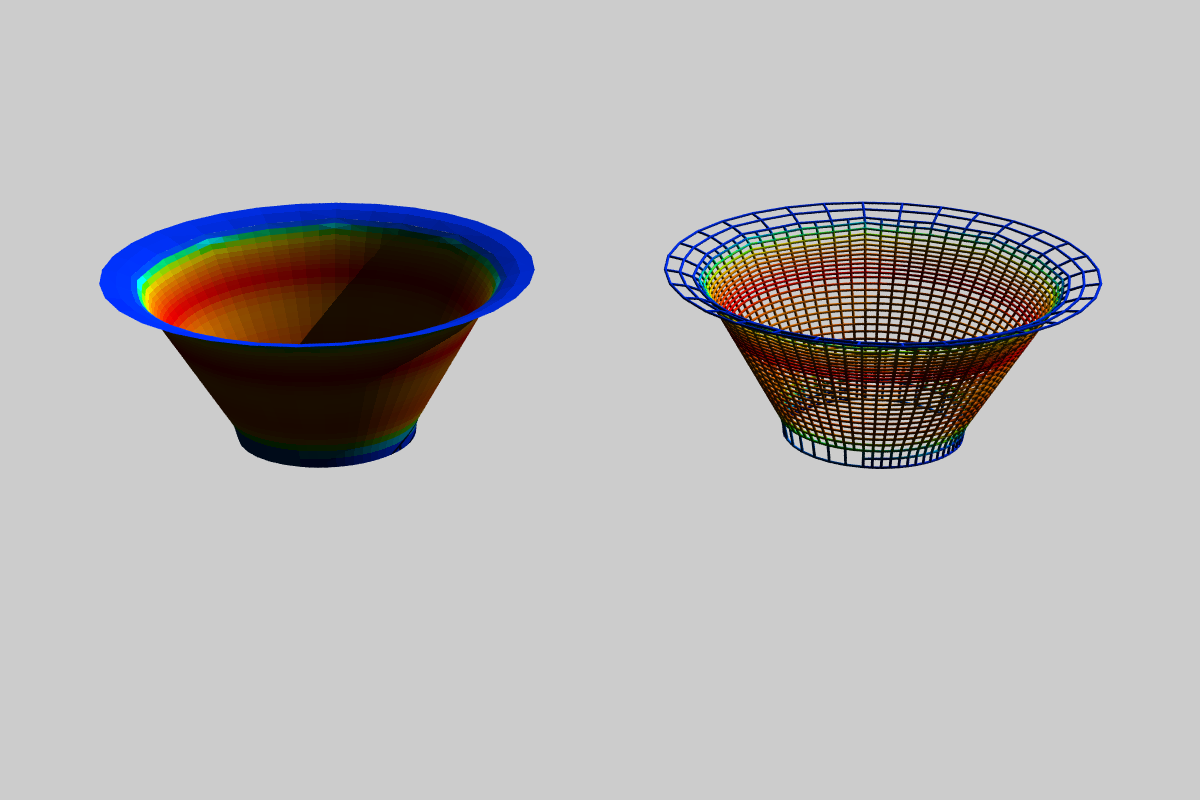
basic mesh:
Picture 2:
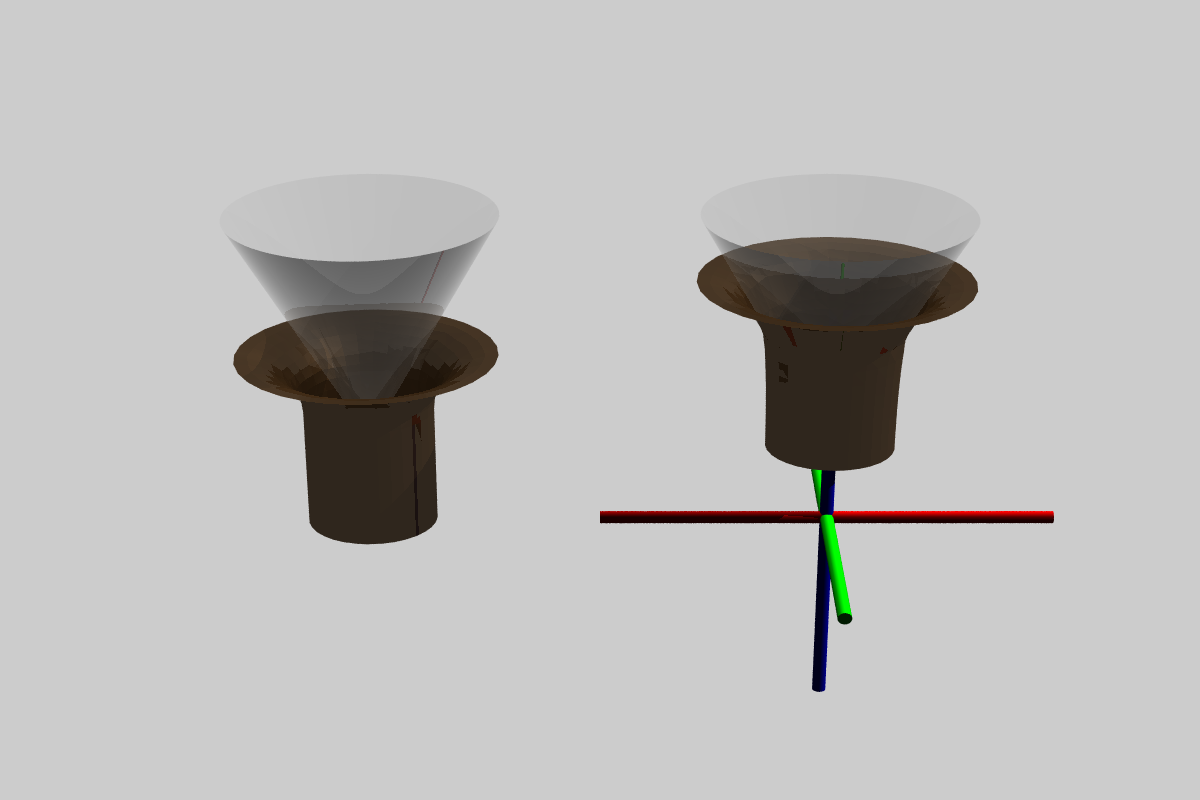
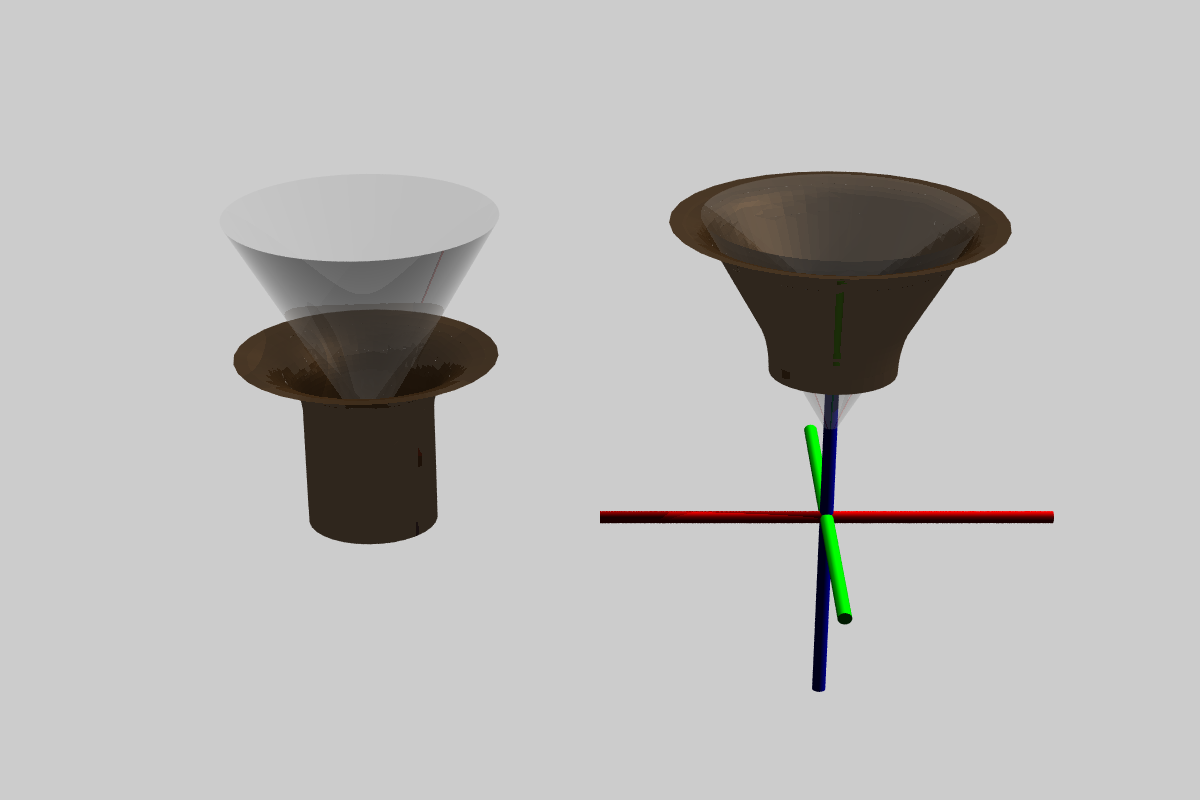
Picture 3: actual damping factor: t-Damp=0.80
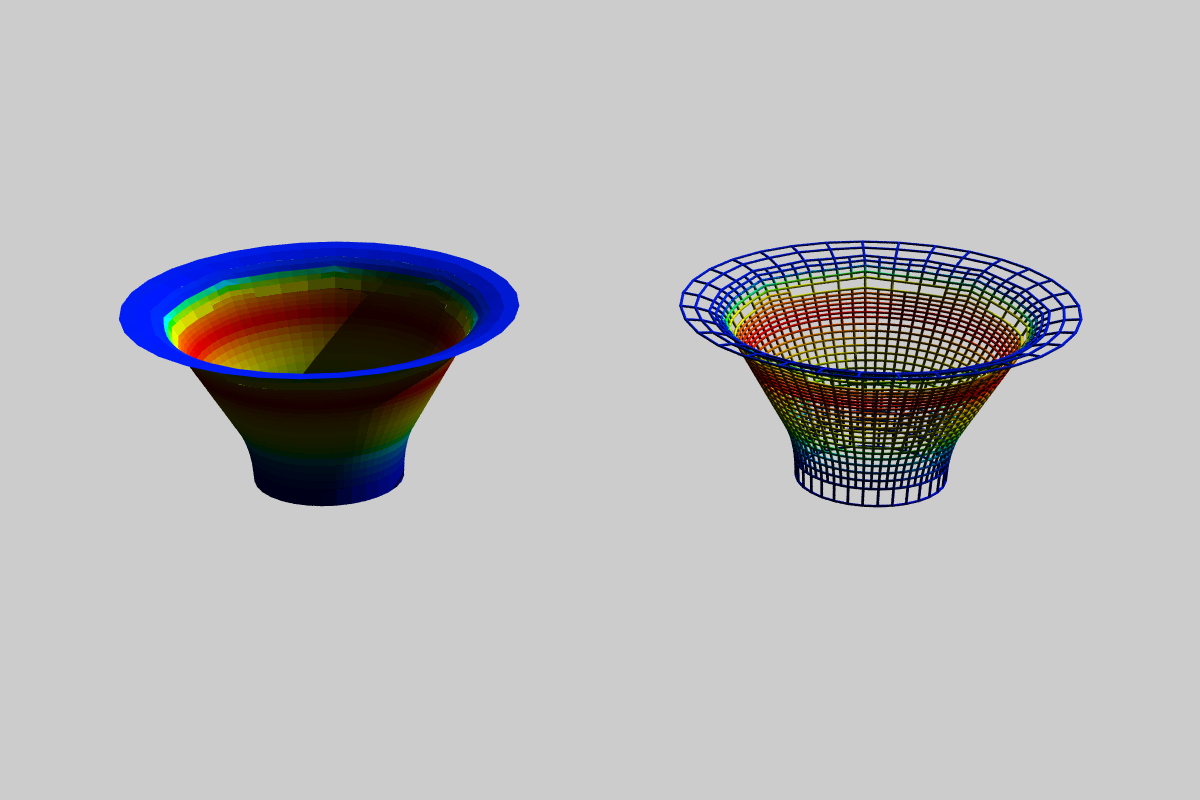
Result after fourth incremental hop and Newton-iteration:
Picture 4:
Picture 5: actual damping factor: t-Damp=1.20
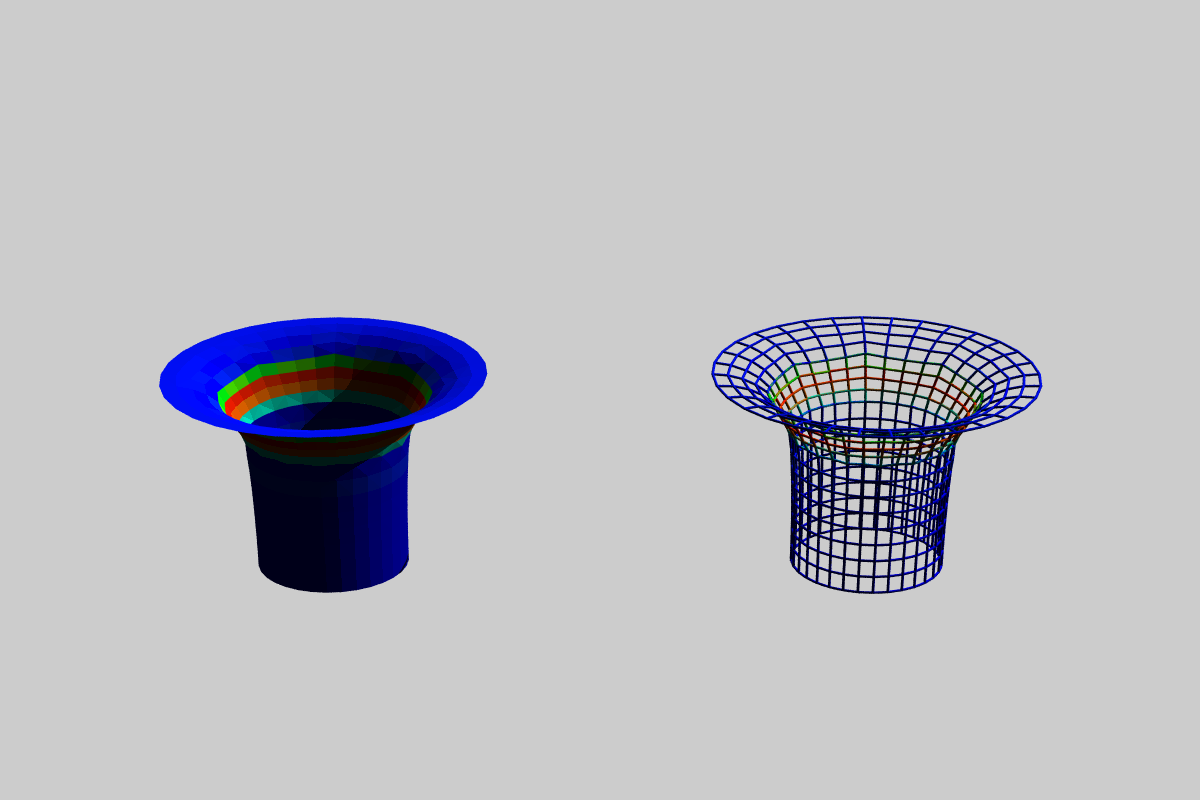
Result after six incremental hops and Newton-iterations and two total refinements:
Picture 6:
Picture 7: actual damping factor: t-Damp=1.60
Result after 8 incremental hops, Newton-iteration and less adaptive refinements:
Picture 8:
Picture 9: actual damping factor: t-Damp=2.00
Result after 10 incremental hops, Newton-iteration and less adaptive refinements:
Picture 10:
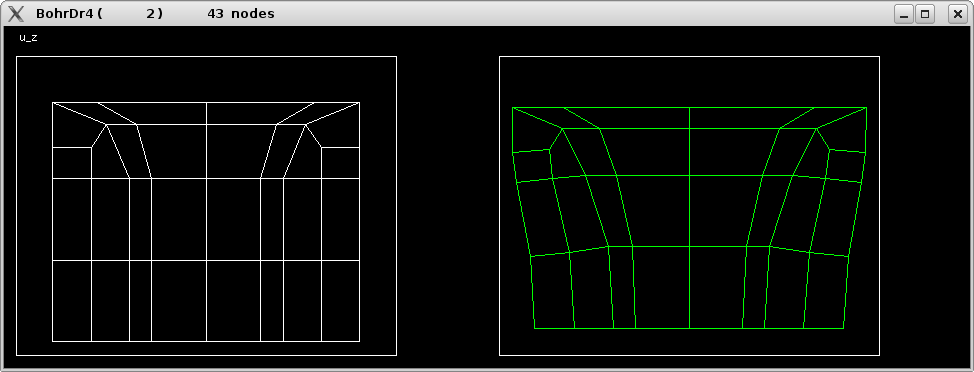
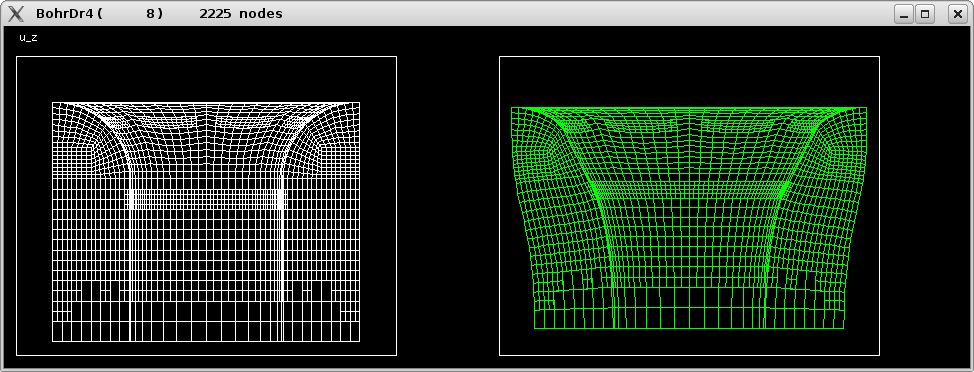
The following pictures show the adaptive FEM mesh in cross section (y=0):
Picture 11:
Picture 12:
Picture 13:
Material coefficients:
c_10
D_2
3.57
3.57/3
volume force :
f
(0,0,0)
Boundary conditions:
Dirichlet-type:
contact boundary
(cone)
u=(0,0,5)
(bottom)
Neumann-type:
--
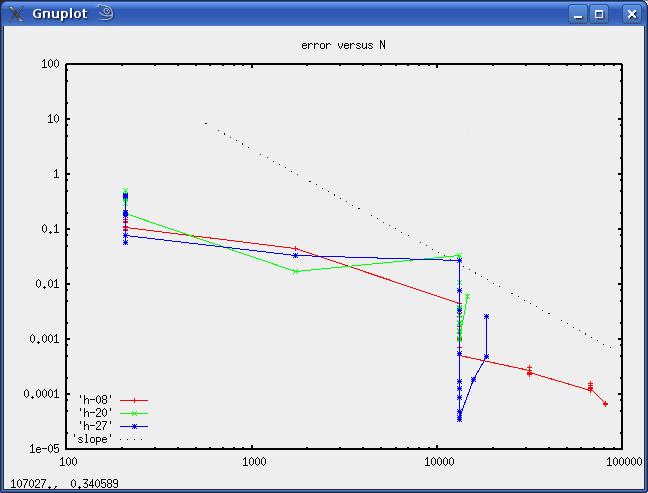
Typical behavior of estimated relative error:
(Das typische Verhalten des geschaetzten rel. Fehlers)
(Legend)
here some RUNs with times / iteration numbers / etc.